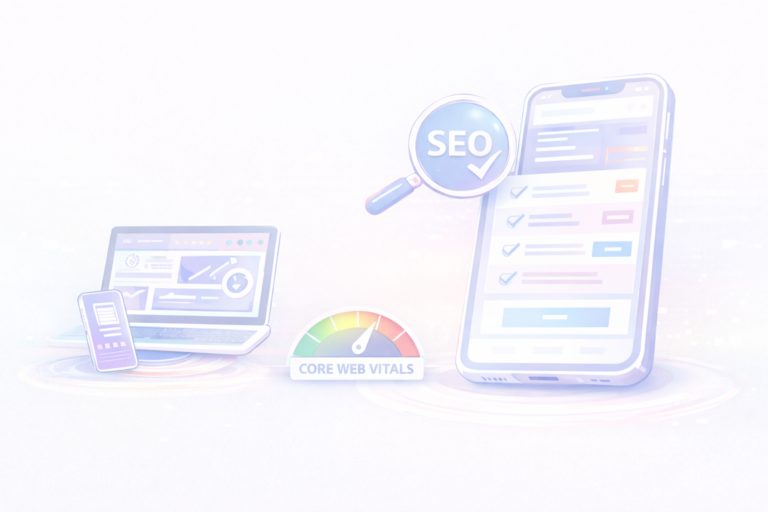
A website redesign in 2026 is no longer just about aesthetics. With rising competition, AI-driven search engines, and increasingly impatient users, businesses must focus on user experience (UX), website speed, and SEO to stay relevant.
Whether you’re a D2C brand, e-commerce business, or service provider, a poorly executed redesign can hurt rankings, conversions, and revenue. This website redesign checklist for 2026 will help you redesign your site the right way—with performance and growth in mind.
UX (User Experience)
A successful website redesign in 2026 must begin with user experience. With mobile traffic accounting for the majority of visits, a mobile-first design is essential. Clear navigation, readable typography, and a strong value proposition above the fold help users quickly understand what your business offers. Conversion-focused elements such as clear call-to-action buttons and trust signals (testimonials, certifications, client logos) play a critical role in improving engagement and lead generation. Accessibility standards, including proper color contrast and alt text, are also important for both usability and compliance.
Website Speed & Performance
Website speed is a major ranking and conversion factor in 2026. Google evaluates performance using Core Web Vitals such as Largest Contentful Paint (LCP), Cumulative Layout Shift (CLS), and Interaction to Next Paint (INP). Slow-loading websites experience higher bounce rates and lower conversions. Optimizing images, reducing unnecessary scripts, limiting plugins or Shopify apps, and using fast hosting with a global CDN can significantly improve performance. Google’s official Core Web Vitals documentation provides clear benchmarks businesses should aim to meet:
https://developers.google.com/search/docs/appearance/core-web-vitals
SEO-Safe Redesign Strategy
One of the biggest mistakes during a website redesign is losing existing SEO rankings. Maintaining clean URL structures, implementing proper 301 redirects, and preserving high-performing pages are critical steps. Heading structures (H1, H2, H3) should be used correctly, with keywords placed naturally to support search visibility. Content should be optimized for AI-driven search and voice queries by answering user intent clearly and concisely. Google’s SEO starter guide remains a reliable reference for redesign best practices:
https://developers.google.com/search/docs/fundamentals/seo-starter-guide
Final Checklist & CTA
A well-executed website redesign improves user experience, boosts search visibility, and increases conversions. By focusing on mobile-first UX, fast loading speeds, Core Web Vitals optimization, and SEO-safe migration, businesses can build future-ready websites that support long-term growth. If you are planning a website redesign in 2026 and want to avoid performance or SEO issues, professional guidance can make a significant difference.
👉 Book a free website strategy call here:
https://webquery.in/#bookcall